.png?width=604&height=318&name=Siljes%20Corner_%20mega%20nav%20promo2%20(1).png)
|
In a nutshell
|
Driftig Eiendomsservice AS is a wholly owned subsidiary of OBOS Eiendom and provides operational services for commercial properties in the Oslo area. Technical services, daily operations, maintenance and assignment-based additional services for tenants - distributed across an operational team of operating technicians, team leaders and supervisors across several buildings.
General Manager Ole Eidslott operated without a dedicated HR person. This means that he handles personnel administration himself. Everything from sickness absence follow-up to NAV documentation, interpersonal processes, new hires, and the rest of the many jobs HR people do. We had a chat about how Huma helps a general manager to also be an entire HR department.

Starting with an HR system right from the start
"Driftig is a young company, and we've had Huma with us right from the start." That was one of the first things Ole told us when we had a chat. It was an easy choice for Ole and Driftig. They simply wanted to avoid building up a lot of manual routines only to clean them up and digitize them later. "We wanted to get it right from day one."
"Huma basically fills that role for us. An HR one-stop shop, pure and simple."
Ole goes on to describe one of the company's most important ambitions: "It should be easy to be an employee of Driftig, whether you're an operations technician in the field or a team leader with HR responsibility." To achieve this, there needs to be one place where everything HR-related lives, not a hodgepodge of email threads, folders and notepads. "We're an operational company with no internal HR function, so Huma basically fills that role for us. It's an HR one-stop shop, pure and simple," says Ole.
And choosing Huma was a simple choice. A combination of price, functionality and, perhaps most importantly, a good deviation module was the decisive factor. The implementation of the system was not a problem either, if we are to believe Ole. "I would dare to say that Huma is one of the simplest programs on the market," he says.
"I would dare to say that Huma is one of the simplest programs on the market."

Good overview and traceability
As both a general manager and HR person, Ole gets several benefits from gathering everything HR-related in one HR system. Two of the most important are an overview of what's happening and an easy way to track down what has happened in the past.
"It's as much about legal certainty for the employee as it is about supporting up the company."
One example he mentions is demanding personnel cases, which they sometimes experience. It's crucial to be able to go back in time to see what was done, who did it and when it was done. "It's just as much about legal certainty for the employee as support for the company."
More self-management and easier handling of deviations
Even before Driftig started using Huma and they started their company, they knew that Absence would be an important module. That also turned out to be true. It makes it easier for employees to apply for all types of absence, and for managers to know who is at work and to plan resource allocation.
As a facility management company operating in commercial buildings, errors and mishaps are impossible to avoid. Driftig handles technical errors, HSE deviations, and incidents across several buildings on a daily basis. A good system for managing non-conformities is therefore essential.
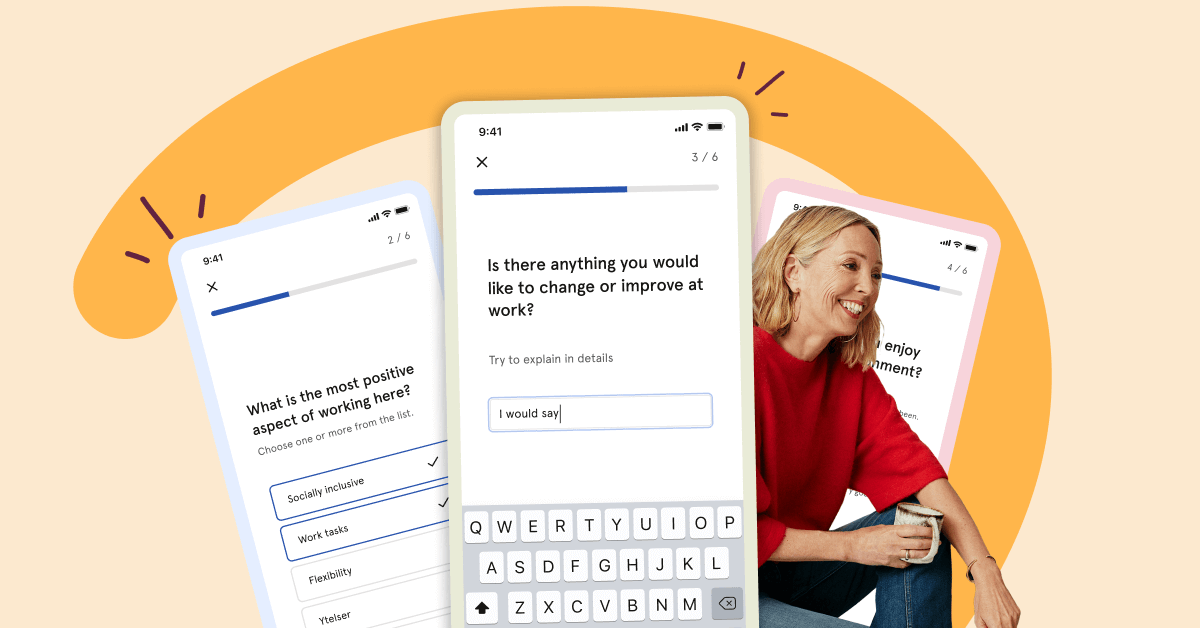
"We now receive many more deviations than before we started using the module," says Ole. It may not sound like a positive thing, but it's actually very good. The increase in deviations is not due to more deviations, but to a much lower barrier to reporting them. This means that more nonconformities are now handled correctly, and none are pushed under the carpet. "It's so much easier with Huma's great app," he continues.
"We're a small team with knowledge and gumption, and Huma helps us make things possible."
It's not just Huma's own features that Driftig saves time and headaches either. "Everything with NAV/Altinn I spend a lot less time on now, simply because the integration works so well." He goes on to mention that they also use the integration with Tripletex.
Ole says it's difficult to quantify exactly how much time they save on different processes since they've been using Huma from the start, but one thing is certain, says Ole: "We are a small team with knowledge and gumption, and Huma helps us make things possible."
Here at Huma, we know that not all small and medium-sized businesses are able to have a dedicated HR department. To get the proof that it is possible, in black and white, from Ole and Driftig Eiendomsservice, is something we really appreciate. Thank you very much for that and for a nice chat, Ole!
Frequently asked questions about running HR without an HR department