.png?width=604&height=318&name=Siljes%20Corner_%20mega%20nav%20promo2%20(1).png)
|
Summary
|
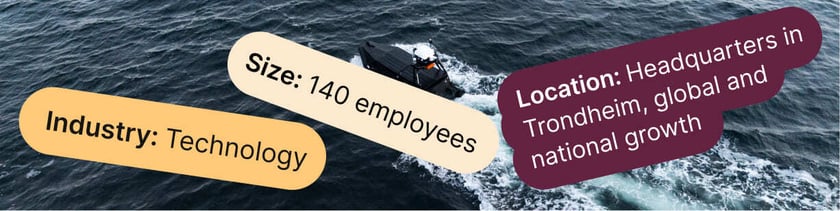
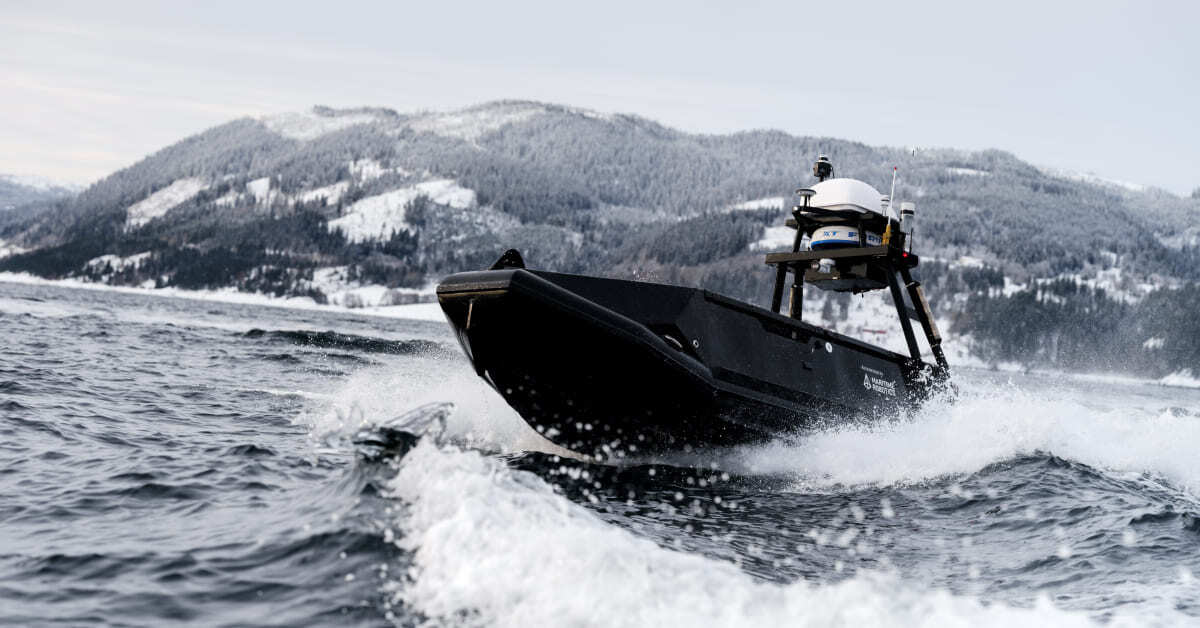
At Maritime Robotics, they specialize in maritime autonomy and marine drones. In fact, they are among the best in the world in this field. Anja Vollan is Head of People and Culture. She says she has never experienced a work environment characterized by such a high level of commitment and passion for what they do.
Maritime Robotics has customers and colleagues all over the world, and in recent years they’ve seen significant growth. They chose Huma to support that journey and their ongoing people initiatives both during and after this period of growth. We sat down with Anja to talk about it.
The search for an HR system began with massive growth
For Maritime Robotics, it was essential to have a system that could support them in processes related to people—processes involving day-to-day operations, management tasks, and employee follow-up.
“When a company grows significantly, there’s a need for new processes and procedures; for us, it was important that these processes support us rather than hold us back.”
Given the explosive growth that Maritime Robotics experienced, this is especially important. “When a company grows rapidly, there’s a need for new processes and routines; for us, it was important that these processes support us rather than hold us back,” says Anja.
The search began when they drew up a list of needs and wishes for what an HR system should help them with. After reviewing the functionality of several competing systems, they chose Huma. Anja explains that there are several reasons for this: “The fact that it’s easy to implement, user-friendly, has great features, allows for simple management of user access, and that everyone can use Huma were the deciding factors.”
Plug-and-play right from the start
According to Anja, the implementation of Huma went like a charm. “It was a really smooth process! I found that, from a technical standpoint, Huma was essentially ‘plug and play.’” She also explains that HR work isn’t a “separate bubble,” but a central part of Maritime Robotics. That’s why it was important for the system to become “their” system—not just something for HR and management.
For that reason, they involved the employees right from the start. The various departments have been able to build their own onboarding flows and other processes that are unique to each department. “We’re building the system brick by brick, and have now incorporated several automated processes that encompass not only HR-related tasks but also other core business functions that run through automated workflows,” says Anja.
Anja also mentions that they received great support from their contact person at Huma. She also gives credit to her People colleague Camilla. “She’s our in-house Huma expert and did a brilliant job during the system’s implementation.”
It’s easier to grow with the support of good systems
After two years with Huma, Maritime Robotics has noticed a significant difference in its day-to-day HR work. Right from the start, they’ve benefited from consolidating all HR tasks into a single system. “Today, we’re making extensive use of most of the modules,” says Anja.
“We’ve become particularly familiar with the onboarding module”
Then there was the extreme growth they’ve experienced. “We’ve become particularly familiar with the onboarding module after hiring 47 people last year alone,” Anja shares, adding that she dares not think about how this would have worked without Huma’s onboarding workflows. She says that new hires quickly get into a routine with their onboarding processes. There, they quickly gain an overview of the company and the opportunity to shadow employees in other departments to learn the skills they need to acquire.
“The organizational chart is also incredibly valuable for new hires. They can use it as a kind of reference guide with photos and information about their colleagues,” Anja explains, adding that it’s great to be able to look up colleagues across departments in a fast-growing company.
She also notes that managers find their jobs easier thanks to Huma’s many templates, processes, and handbooks.
“Maritime Robotics creates autonomous boats and autonomy at sea; Huma creates autonomous employees within a company!”
Anja explains that Competence module is important: “We have a broad commitment to skills development within the company, so it’s incredibly important to us that our employees have the opportunity to grow and acquire new skills.”
Before we say goodbye, Anja notes that Huma is forward-thinking, fearless, and committed to its customers’ success. We really appreciate that! She concludes by saying: “Maritime Robotics creates autonomous boats and autonomy at sea; Huma creates autonomous employees within a company! A perfect match!” We couldn’t agree more! Thank you so much for a very pleasant chat, Anja!

Frequently Asked Questions About Onboarding in a High-Growth Environment