
Release 0926: Here's what we've been building lately
Huma has new features. Quite a few, actually. Some are about payroll, others about absence. They all have one thing in common: they’re making your job a little easier.
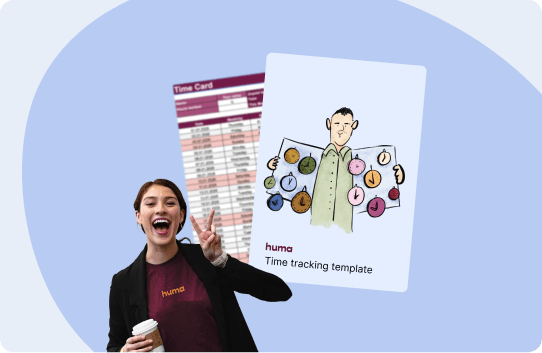
No two workdays are the same, and it’s helpful to have an overview of what you’re working on each day. We’ve created a time tracking template you can customize and use however you like. Download it for free here.
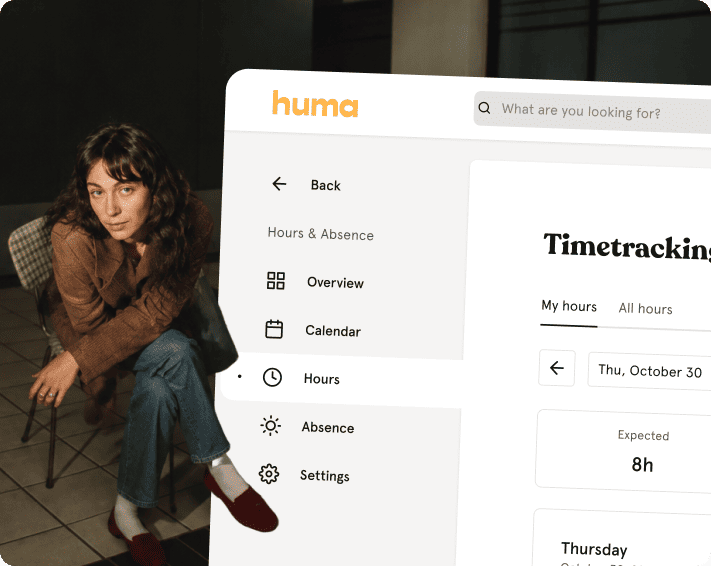
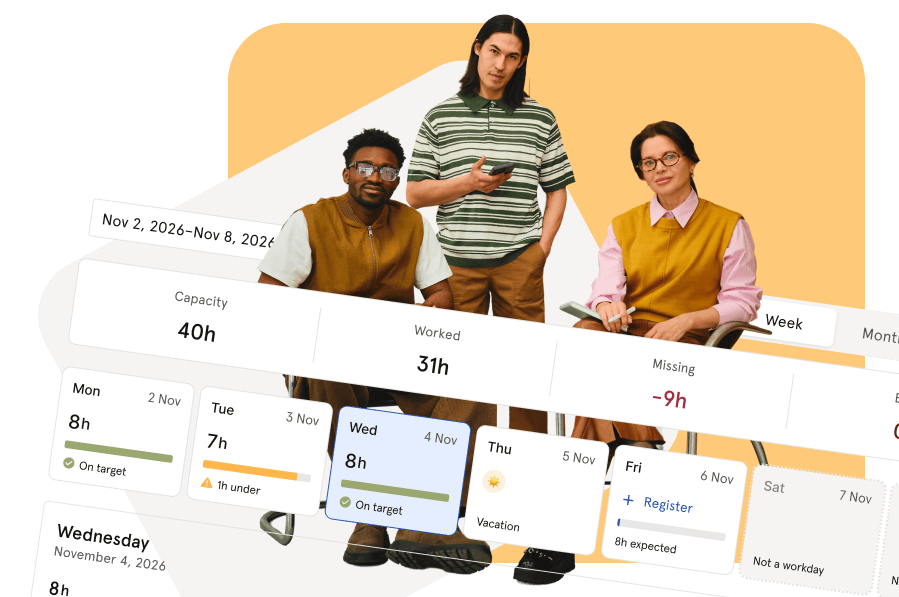
Employement laws in the Nordics state you must keep track of how much your employees work. This doesn’t have to be hard. In Huma, you and your employees can log hours in seconds. That way, you have the overview you need in one place, automatically and ready whenever someone asks.
You are required by law to keep track of how much your employees work. This also applies to those with a fixed salary and regular office hours. Fortunately, it becomes much easier when you have time tracking built right into your HR system.
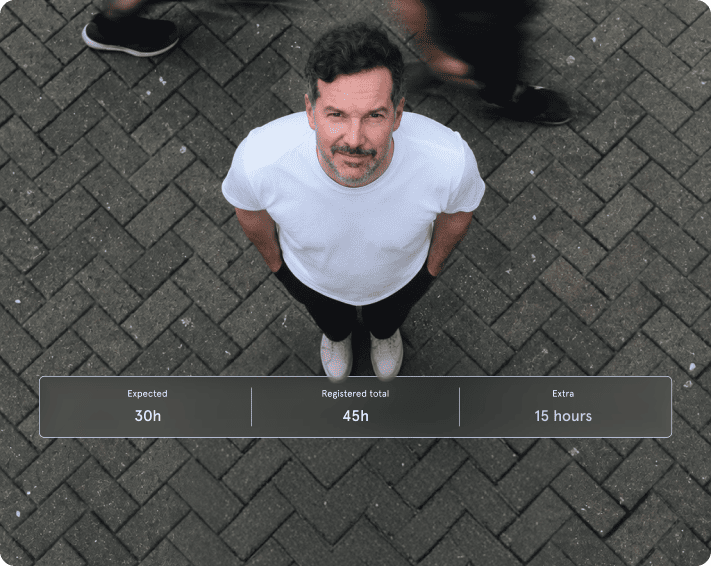
Are your employees working more than they should? Expected and actual hours rarely match, so it's best to catch overtime early so you can do something about it.
What do HR and time tracking have in common? They both have a huge impact on your people. So there’s no reason why you and your people should have to juggle different systems to do something that can be done in one place.
There's a lot to go through every month when every employee has their own Excel spreadsheet for tracking hours. With a dedicated time-tracking system, you can export the hours automatically, without any extra work.
Nora Frebergvik
HR & Graduate Recruiter
![]()
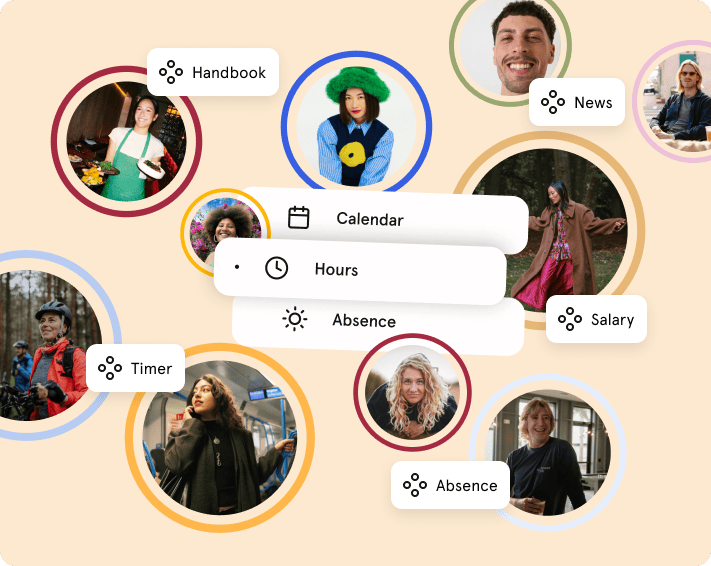
It becomes more difficult to complete tasks when you have to switch back and forth between systems. In Huma, you can handle your HR tasks, absence and time tracking without switching between systems.
The hours you log can be sent directly to your payroll system. With just a few clicks, you can transfer the logged hours to payroll systems such as Tripletex, PowerOffice Go, or Unimicro.
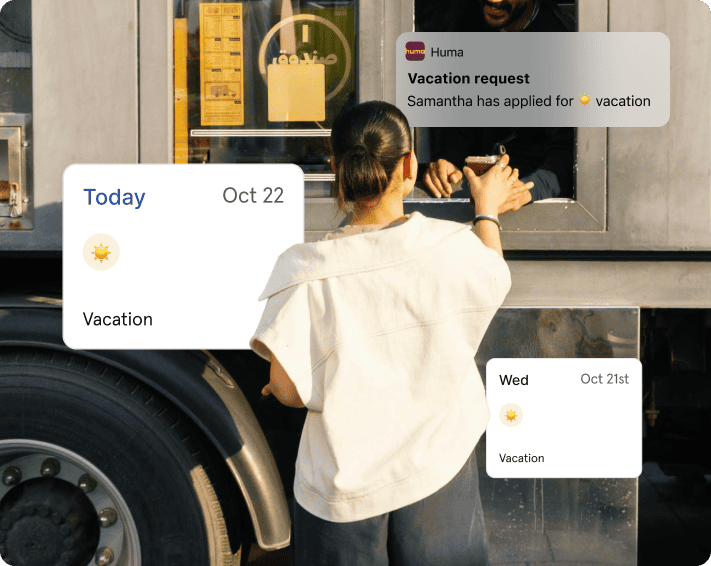
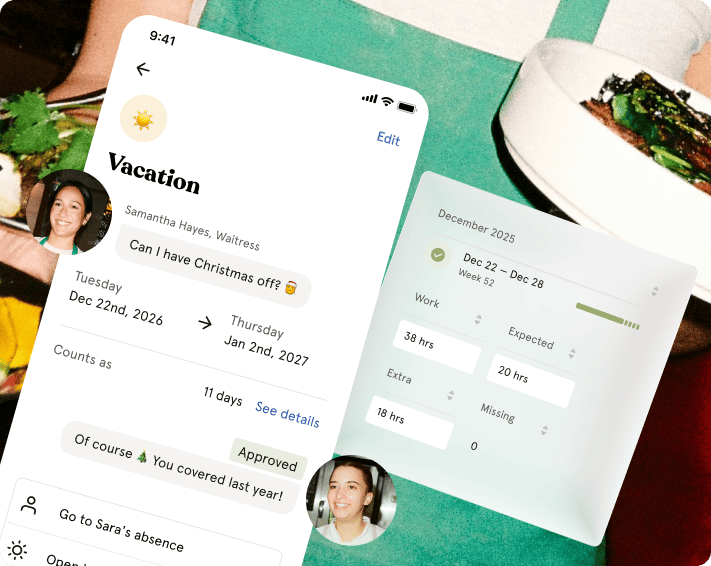
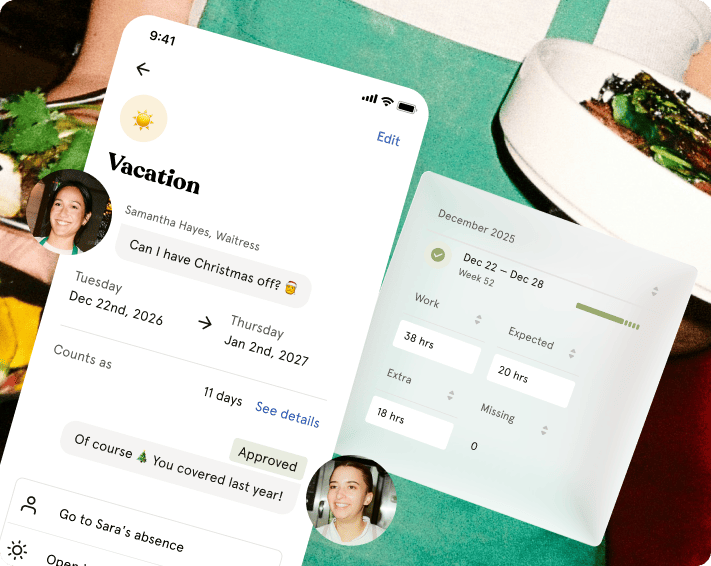
With time tracking and absence tracking in Huma, you can easily keep track of how much your employees work, both now and in the past. This makes it easier to see who’s working too much and might need a break, or who kept the shop running during last year’s Christmas break, so they don’t have to do it again this year.
The timesheet has long had a reputation for belonging on the construction site and in the shift schedule. In the office, it often exists as a spreadsheet that no one opens or can find. That’s why we’ve chosen to do one thing well at Huma Time: display the hours, so you can take care of your people.
Section 10-7 of the Working Environment Act is brief. Employers must keep track of how much each employee works. This also applies to employees with a fixed salary and regular office hours. The employer must be able to present this record to the Labor Inspection Authority, employee representatives, and the employee themselves.
Yes. This obligation applies regardless of the form of compensation. The exception is executive and particularly independent positions.
Huma provides you with an overview of each employee's hours, and employees can view their own. How you follow up on this overview remains the employer's responsibility.
No. Employees, managers, and work schedules are already there. Just add your daily hours, and you're all set.
Huma has new features. Quite a few, actually. Some are about payroll, others about absence. They all have one thing in common: they’re making your job a little easier.
Maritime Robotics is one of the world's leading companies in maritime autonomy and sea drones. They've grown fast — and Huma has been along for the ride. We sat down with Anja Vollan, Head of People and Culture, to hear more.
Security certifications aren't the most exciting thing we do at Huma. But they're among the most important. We're proud to announce that Huma is now ISO 27001 certified. Here's what that means for you as a Huma user.