.png?width=604&height=318&name=Siljes%20Corner_%20mega%20nav%20promo2%20(1).png)
We've made big changes to how we build Huma. We won't go into detail here, but the result is simple: you get new features faster. We've moved from monthly updates to weekly ones. Now something new lands in Huma every single Friday!
Here's a quick update on what we've been working on lately.




Equal pay in minutes
The Nordics have had fair pay laws for years. And for just as long, they've been hard to understand. It's not getting any simpler with the EU's Pay Transparency Directive — Nordic EU countries need to implement it soon, while Norway, via the EEA, will get its own version further down the line. But that doesn't mean fair pay has to be complicated.
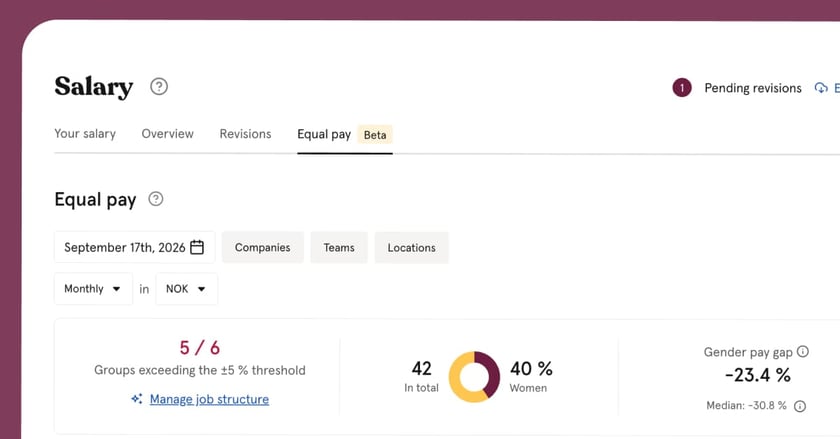
We've built a simple way to make sure you pay equal pay for work of equal value. It's a three-step rocket, starting with job descriptions:
-
Job descriptions
-
Pay grades
-
Pay analysis
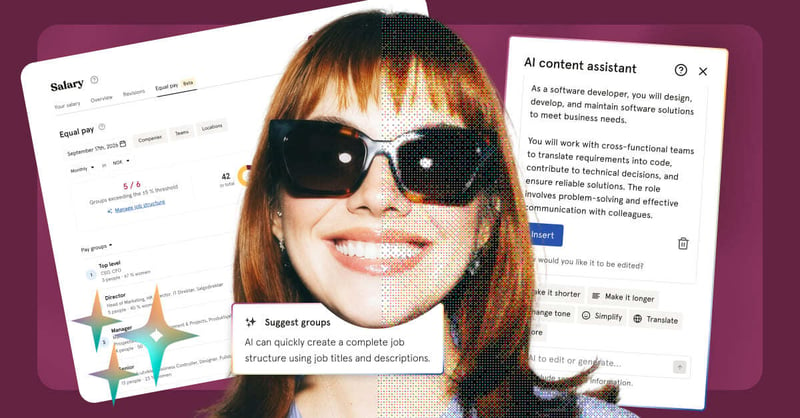
Every employee in Huma has a job title. Huma's AI can write a first draft of the job description based on that title and a few keywords about the role. You make any changes needed, then save.
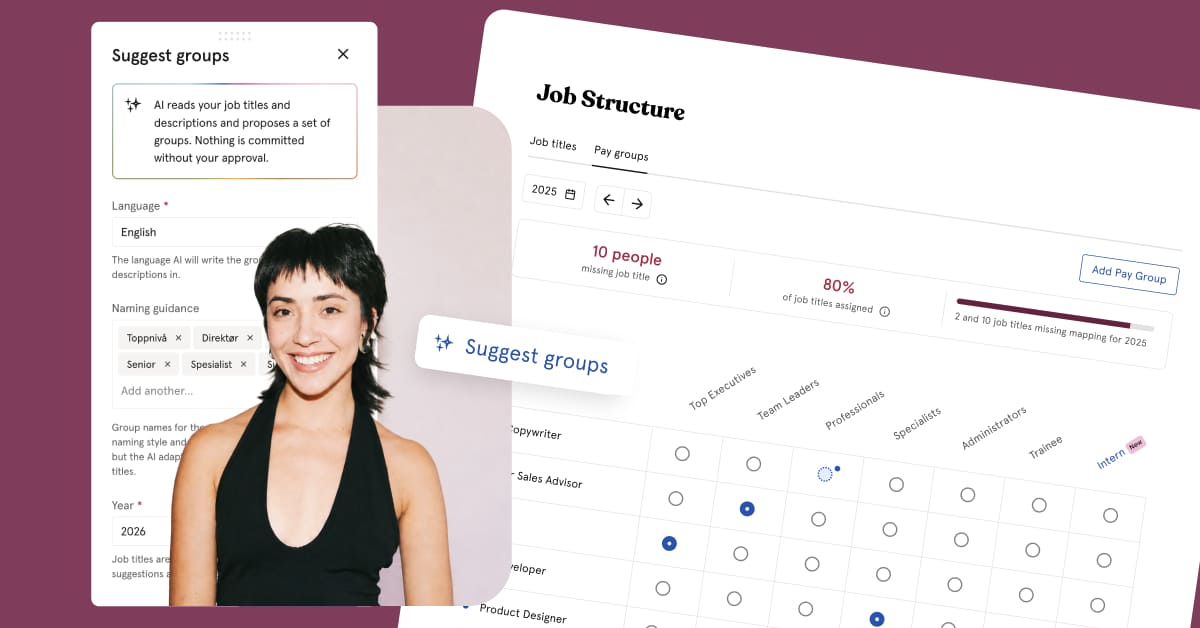
These titles and descriptions form the basis for what we call salary groups. Huma's AI looks at all your employees and suggests groups of people doing similar work. That might mean groups like management, team leads, sales, and so on.
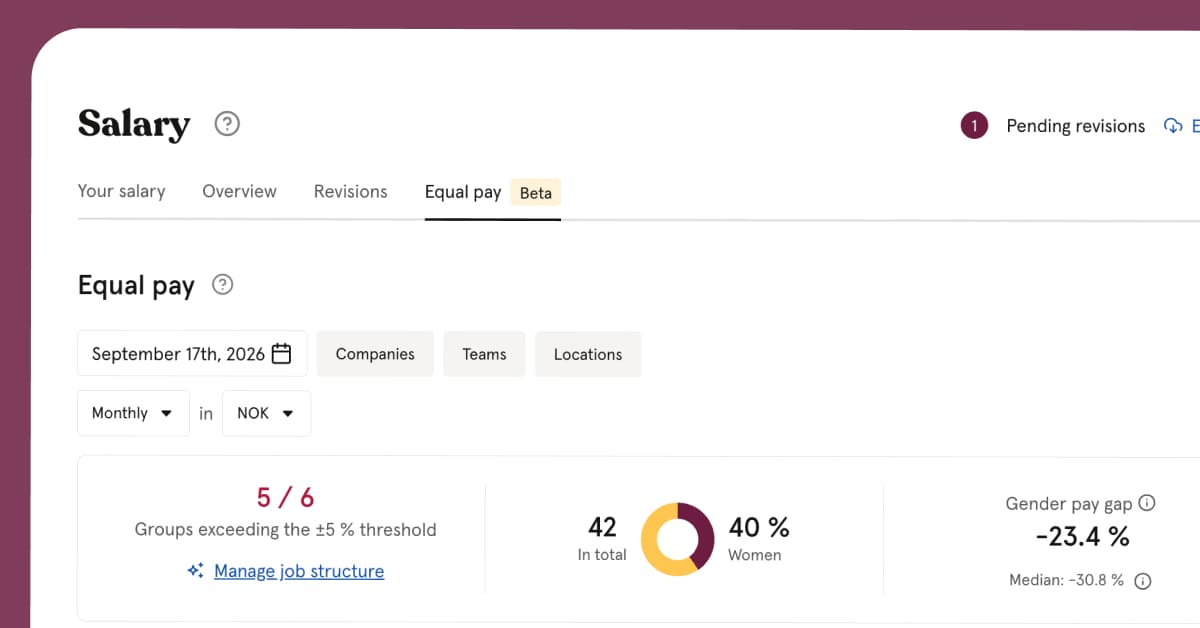
The great thing about salary groups is that you can use them for pay analysis — just not the old way. No more endless spreadsheets, no more hours spent plotting and comparing names and numbers. Huma's AI uses the salary groups to map out pay differences within each group and gives you a clear overview. That makes it easy to see whether people are paid fairly, or whether the pay gap within a group crosses the critical 5% threshold.
Other things we've been tinkering with
Reports and insights
-
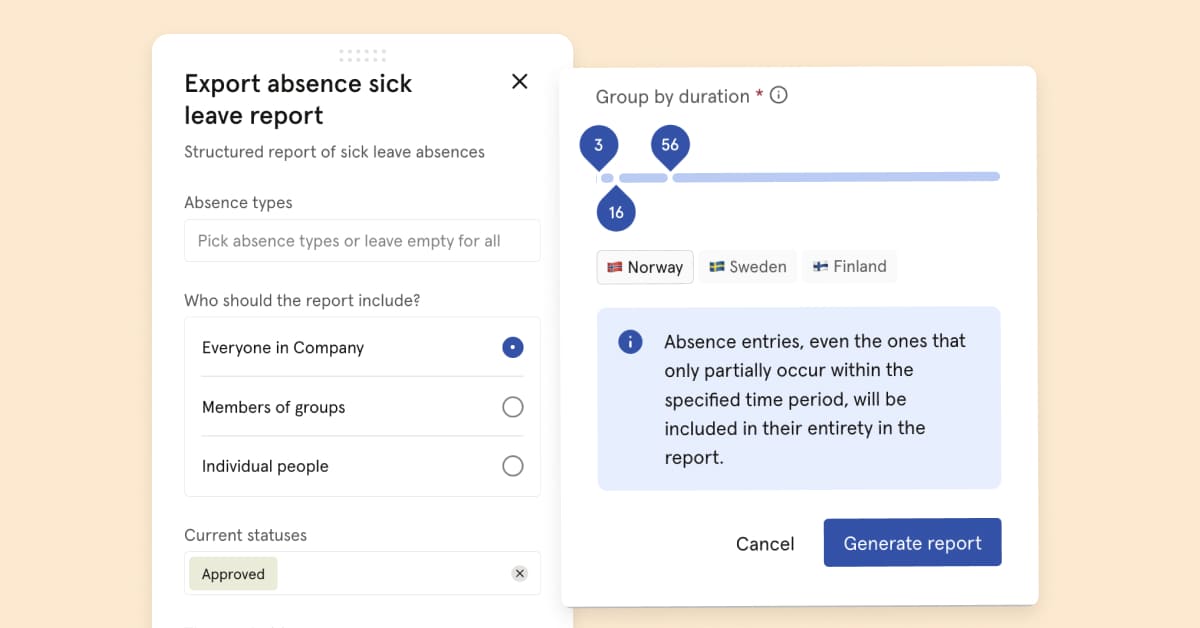
Sick leave reports: Check sick leave trends in minutes.
-
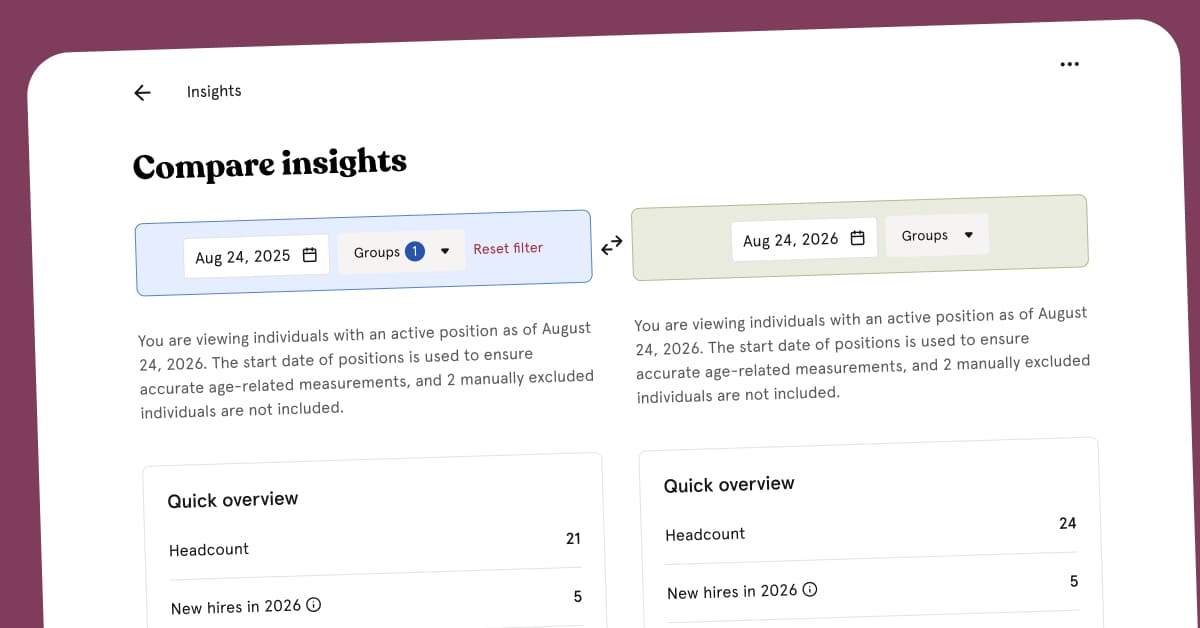
Historical insights: Compare gender balance, age range and more. How is it today compared with how things looked before.
-
Track employee turnover: The simplest way to see if people are happy at work is whether they leave or stay. Compare this year's turnover with last year's.
-
Stay on top of self-certified sick days: You decide how many self-certified sick days and periods your company allows. Huma tracks how many have been used.
iOS and Android
-
Save contacts straight from Huma: Got a colleague you call more than most? On iOS, you can save them as a contact right inside Huma.
-
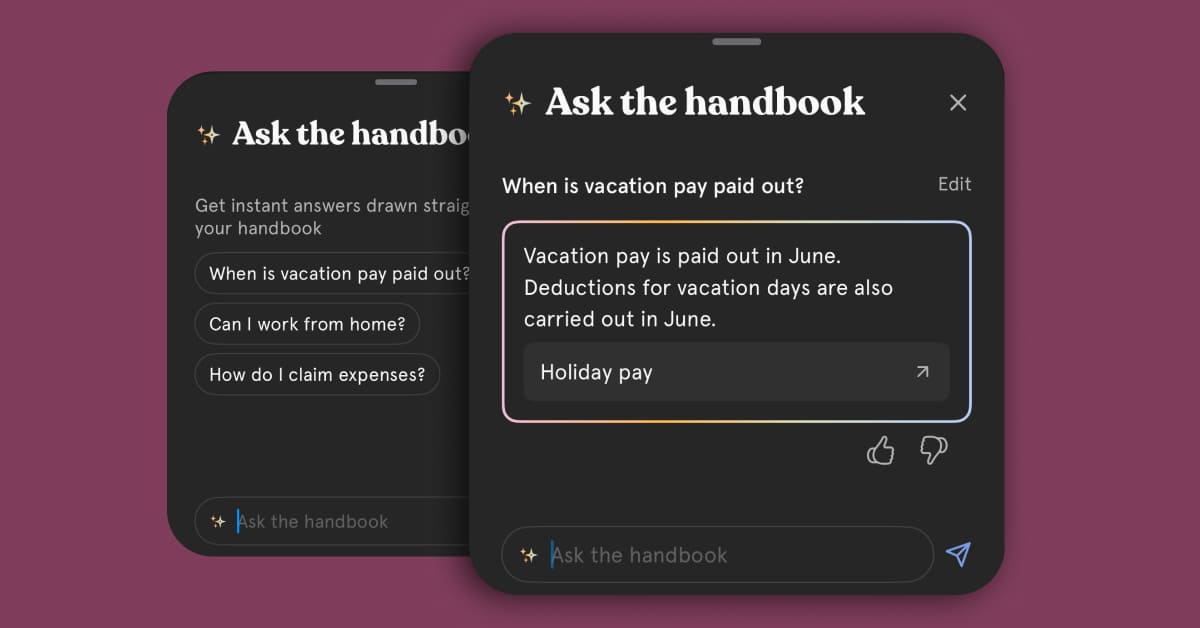
Ask the employee handbook anything: Stop flipping through page after page. Just ask Huma's AI instead.
-
Complete your profile: On Android, the app checks that employees have filled in their profiles.
Integrations
-
Unimicro and Xledger: Pay and absence data in Huma now syncs automatically whenever it's updated in Huma.
-
NAV: Sick leave from NAV now feeds into Huma automatically. The integration just got better!
-
Open API: Now you can build your own custom integrations in Huma.