.png?width=604&height=318&name=Siljes%20Corner_%20mega%20nav%20promo2%20(1).png)
Whether your team is 30, 80 or 150 people, a big part of the job isn't about your people, your culture or the business you actually care about. It's about keeping up with rules written by people who've never run a company themselves.
Most SMEs we talk to don't have time for that. The complexity gets too much, and the to-do list gets too long.
Equal pay is a good example
Most employers in the Nordics already have some kind of duty to map gender pay gaps. They also have to show they're working on them systematically. How much applies to you often depends on your headcount.
You have to define comparable work, pull pay data, explain any gaps and write it all up in a report. That alone is a fair bit of work.
Then the EU Pay Transparency Directive lands on top. It was meant to take effect on 7 June 2026. The reality is far messier. Denmark is aiming for 1 January 2027. Sweden has put its legislative work on hold. Finland won't make the deadline and recently settled on January 2027. Norway has no deadline yet, because the directive hasn't been added to the EEA Agreement.
Four neighbouring countries, four timelines. And rules that end up stricter everywhere: pay ranges in job ads, a ban on asking about previous salary, and employees' right to pay information without first having to suspect discrimination.
Nobody disagrees with the goal. Equal pay for equal work has always been a cornerstone of working life, and it always will be.
The problem is that someone in your company has to keep track of it all. What applies today, what's coming, and what your business actually has to do. That's time that should go to your people and your business. And equal pay rules are really hard to get right.
So we built something different
You don't fix this with yet another guide, PDF checklist or standalone equal pay tool. You already have everything you need in your HR system. So why can't it be simple?
-
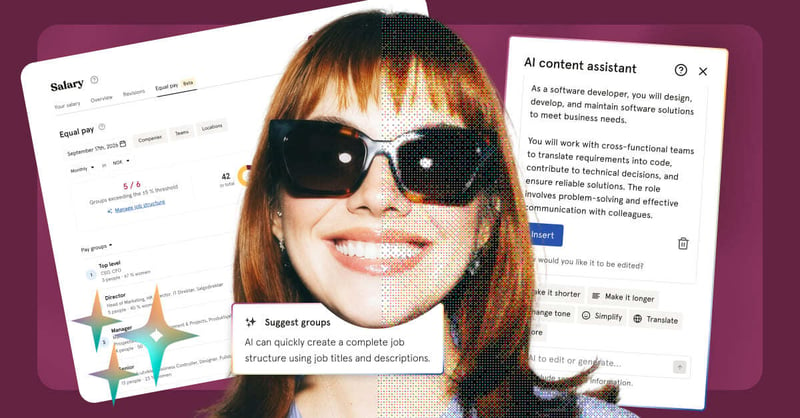
From the moment you create a job description in Huma, we're thinking about equal pay and legal requirements for you.
-
No job descriptions? Huma drafts one for you in 3 seconds.
-
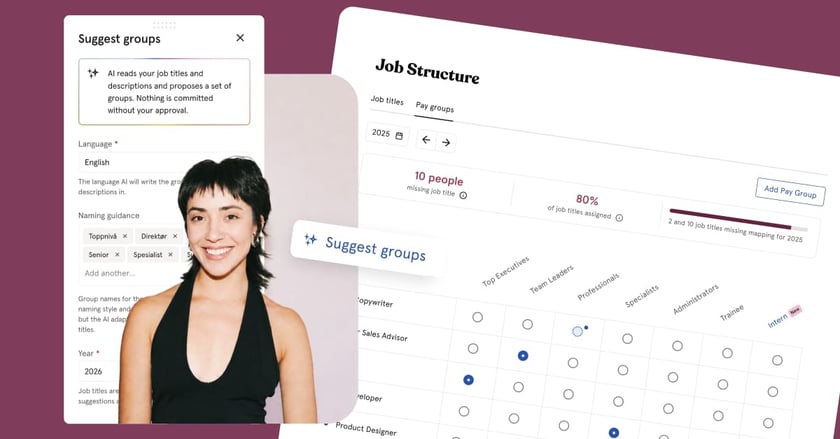
Based on the rules in your country and the size of your company, you now get suggested equal pay groups in a single click.
-
Huma suggests which roles belong in which group. You review and approve, of course. But you never start from a blank page.
-
You get a full equal pay analysis. It shows pay gaps between comparable roles, explained by seniority, responsibility and skills, and it's ready to drop into your report.
This isn't a generic chatbot that's crammed legal texts. It's built on the actual pay and organisation data already in Huma. It's also connected to rules we keep up to date as Norway, Sweden, Finland and Denmark move forward, each at their own pace.

Less admin, more time for your people and your business
We can't make the rules simpler or sync four countries' timelines. What we can do is take the hours you spend on spreadsheets and decoding the law, and give them back. Whether you're the leader building the company or the HR person building the culture.
Equal pay deserves to be done properly. It just shouldn't cost you your entire week.